
How big is the solar system installed at Riello UPS?
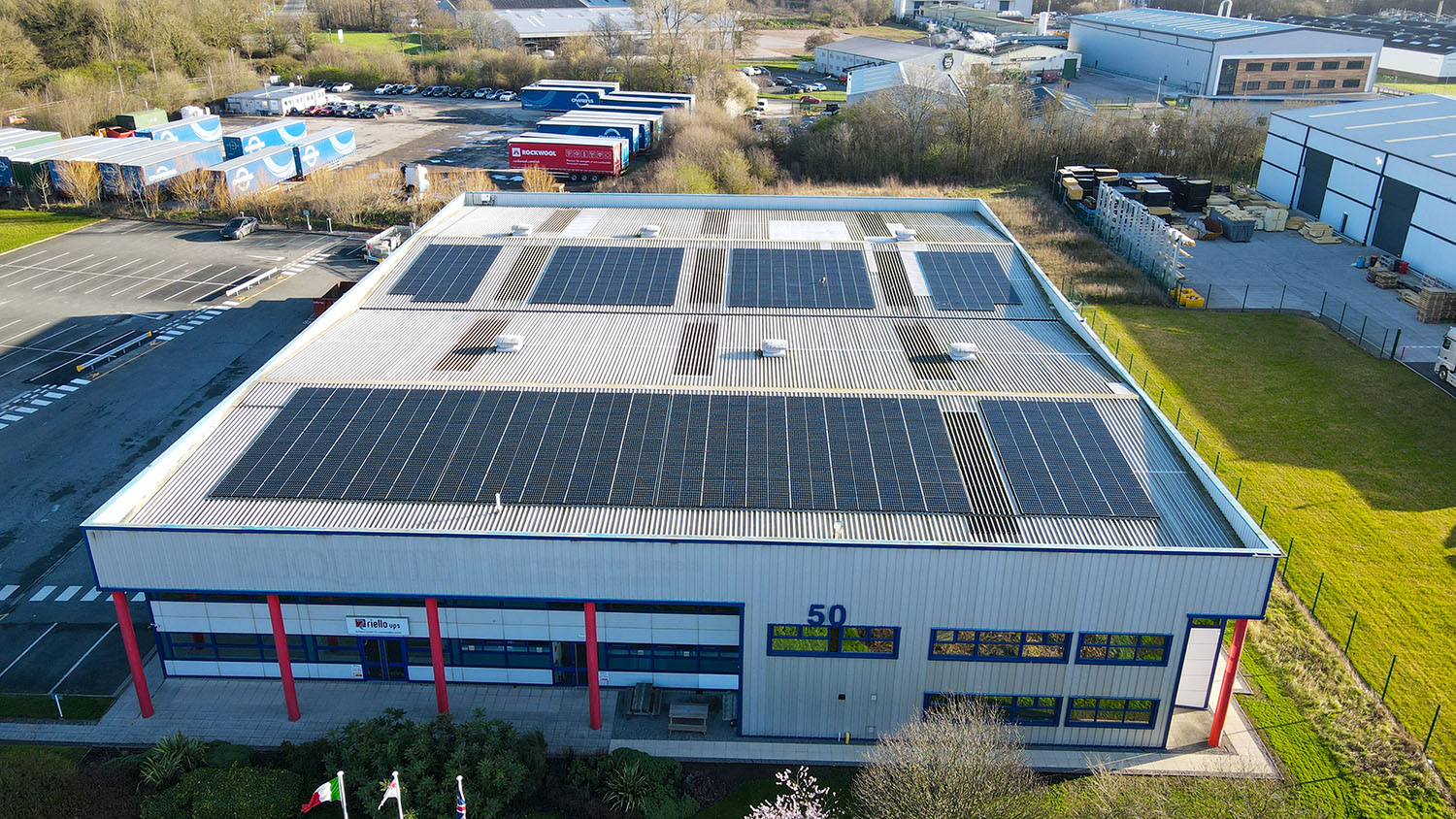
Alliant Energy installed a 60.35kWp solar PV system using 137 panels paired with a Solis inverter. The installation took 2 weeks from arrival on site to commissioning.
Data & Power Systems
60.35kWp system saving £16,457 a year for Riello UPS.
The new installation will bring their level of self-sufficiency up a further 31% with annual savings over £15,000 and an additional carbon reduction of 10,310 kg CO2. .e-loop-item-13340 .elementor-element.elementor-element-166d83a:not(.elementor-motion-effects-element-type-background),.e-loop-item-13340 .elementor-element.elementor-element-166d83a>.elementor-motion-effects-container>.elementor-motion-effects-layer{background-image:url("https://alliantenergy.co.uk/wp-content/uploads/2026/02/Bowland-Pennine-Mountain-Rescue-Solar-11.jpg")}.e-loop-item-13340 .elementor-element.elementor-element-166d83a:hover{background-image:url("https://alliantenergy.co.uk/wp-content/uploads/2026/02/Bowland-Pennine-Mountain-Rescue-Solar-11.jpg")}
Like most data & power systems operations, Riello UPS faced a structural exposure to wholesale electricity prices — a cost line that doubled for many UK businesses between 2021 and 2023 and shows no sign of returning to pre-crisis levels. With significant daytime load and suitable roof space, on-site generation was the obvious lever, but the project needed to stand on its own commercial merits: predictable payback, manufacturer-backed warranties, and zero operational disruption during install.
Following a structural roof survey and DNO capacity check, Alliant Energy specified a 60.35kWp array using 137 high-efficiency mono-PERC panels, paired with a Solis hybrid inverter. The Solis platform was chosen for its export-management capability and remote firmware updates, allowing the array to be tuned over its life without site visits. Surplus generation is exported to the grid under a Smart Export Guarantee tariff, providing a secondary revenue stream alongside the primary saving on imported electricity.
The full installation completed in 2 weeks, scheduled around the customer's operating hours to avoid downtime. Work was carried out by Alliant Energy's directly employed MCS-registered engineers — no subcontracted labour. The system was commissioned to G99 requirements, registered with the Microgeneration Certification Scheme, and handed over with monitoring access, electrical certification, and structural sign-off documents on the day of completion.
In its first full year of operation the system is on track to save Riello UPS approximately £16,457 on electricity costs, with a payback term of 3.6 Years and a projected total ROI of 694%. Over the 25-year warranted life of the panels, the cumulative saving is forecast at £277,760 — a figure that improves materially if grid prices continue their long-term upward trend, and that benefits from the UK's 100% full-expensing capital allowance for qualifying solar assets.
The installation displaces roughly 10.3 Tonnes of CO₂ emissions every year compared with grid-sourced electricity. Over the system's 25-year design life that is the equivalent of removing more than Riello UPS's entire annual Scope 2 footprint several times over — a material data point for ESG, B-Corp and net-zero reporting frameworks.
Data & Power Systems businesses typically run daytime electrical loads — refrigeration, machinery, IT, lighting, compressors — that overlap closely with solar generation. That overlap is what drives strong economics: every unit generated and consumed on-site replaces a unit that would otherwise be bought from the grid at full commercial rates. The Riello UPS project demonstrates how the model scales for this kind of operation.
Alliant Energy installed a 60.35kWp solar PV system using 137 panels paired with a Solis inverter. The installation took 2 weeks from arrival on site to commissioning.
Riello UPS saves approximately £16,457 per year on electricity, with projected lifetime savings of £277,760 over the system's 25-year guaranteed performance period. The payback term is 3.6 Years, delivering a total ROI of 694%.
This project was paid for directly by the customer. Under the UK's full-expensing capital allowance, the entire cost can be deducted from corporation tax in year one — improving the effective payback meaningfully for profitable companies.
The system avoids around 10.3 Tonnes of CO₂ emissions every year compared with grid-sourced electricity. Over a 25-year design life that's a material contribution toward Scope 2 reduction and any ESG or net-zero reporting commitments the business holds.
Probably — the same hardware platform (panels, hybrid inverter, optional battery) scales from roughly 10kW up to 1MW+. The deciding factors are roof area, daytime electricity use, current unit rate, and grid-connection capacity. Alliant Energy carries out a free desktop feasibility study and follow-up site survey before quoting.
Three ways to get started
Get a tailored quote in one working day. No obligation. No hard sell. Speak to a renewable energy engineer — not a salesperson — at a time that suits you.
Accreditations
MCS certification isn't a box-ticking exercise — it qualifies your system for Smart Export Guarantee payments and government grants. Our installers are also NICEIC-approved and TrustMark-registered, and every install is fully insured.
