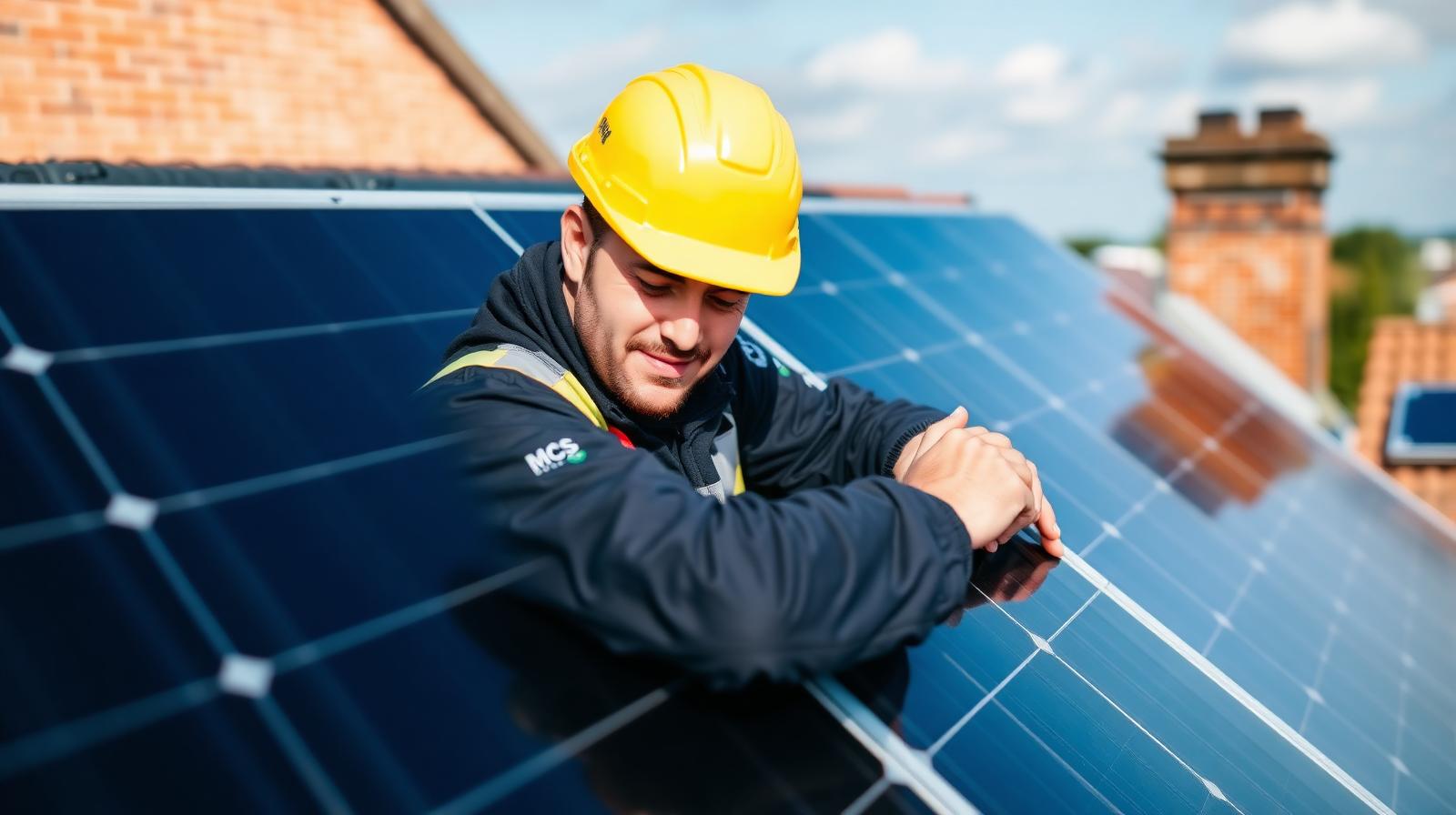
A professional installation looks neat, intentional and structurally secure — both on the roof and inside.
On the roof: the panel array
- Rails parallel to each other, perpendicular to the ridge, with consistent spacing
- Panels level and uniformly aligned — not visibly tilted or misaligned
- Consistent panel gaps throughout the array
- Panels not positioned over skylights or vents where avoidable
- Cabling secured with clips or conduit — no loose runs visible from the ground
- Inter-panel DC cables routed neatly and secured
Sloppy alignment is a tell
Roof penetrations and weatherproofing
- EPDM rubber or lead flashing boots around cable entries — not silicone alone
- Entry points positioned to minimise water ingress risk (avoid valleys, horizontal surfaces)
- No cracked or displaced tiles from installation
Silicone-only entries fail
Cable runs: inside and outside
- External runs in UV-resistant conduit, clipped securely at regular intervals
- No loose or sagging cables on external walls
- Internal runs surface-mounted in conduit/trunking, or chased into walls
- DC cables (panel to inverter) kept separate from AC (inverter to consumer unit)
- Wall entries sealed against weather and pests
The inverter and consumer unit connection
- Inverter at a comfortable working height — not awkwardly placed
- Clear labelling of isolators and switches
- Dedicated AC isolator between inverter and consumer unit
- Generation meter clearly positioned and labelled
- Connection completed by an NICEIC-qualified electrician with appropriate protection devices
Battery installation
- Installed in a dry, ventilated location — not a damp outhouse
- Mounted securely to the wall — not freestanding on the floor
- Away from heat sources (boilers, tumble dryers)
- Clearly labelled with battery type and emergency information
- Connected to monitoring with the app verified working
An installation that meets these standards
Own teams, NICEIC sign-off, app handover before we leave site.
On completion: what you should receive
- A working, commissioned system showing live generation on the app before they leave
- Handover briefing — app, smart tariff integration, error handling
- Written confirmation of MCS certificate application and expected date
- All warranty documentation for panels, inverter and battery
- Confirmation of DNO notification or approval
- NICEIC completion certificate for the electrical work
You should not need to chase any of these — a professional installer provides them as standard at the end of every job.
Snagging: what's acceptable and what isn't
Minor snagging (an unsecured cable clip, slight panel edge alignment) is normal and corrected quickly. What isn't acceptable:
- Cracked or displaced roof tiles
- Cable entries without proper weatherproofing
- System not commissioned or not generating
- App not set up or not working
- Promised components missing or substituted without discussion
Contact the installer immediately in writing if any of these apply.
Frequently asked questions
Can I inspect the installation before the scaffolding comes down?
Yes — ask to inspect roof-level work before scaffolding is removed. It's the best opportunity to check panel alignment, cable routing and weatherproofing. A reputable installer will welcome it.
What if the installation doesn't match what was quoted?
Document discrepancies in writing before final payment. Compare against the written specification (panel brand, inverter, battery capacity) and query any substitutions you weren't told about.
How long after installation should my system be generating?
Immediately — the system is commissioned and tested on installation day. You should see live generation on the app the same day.
