
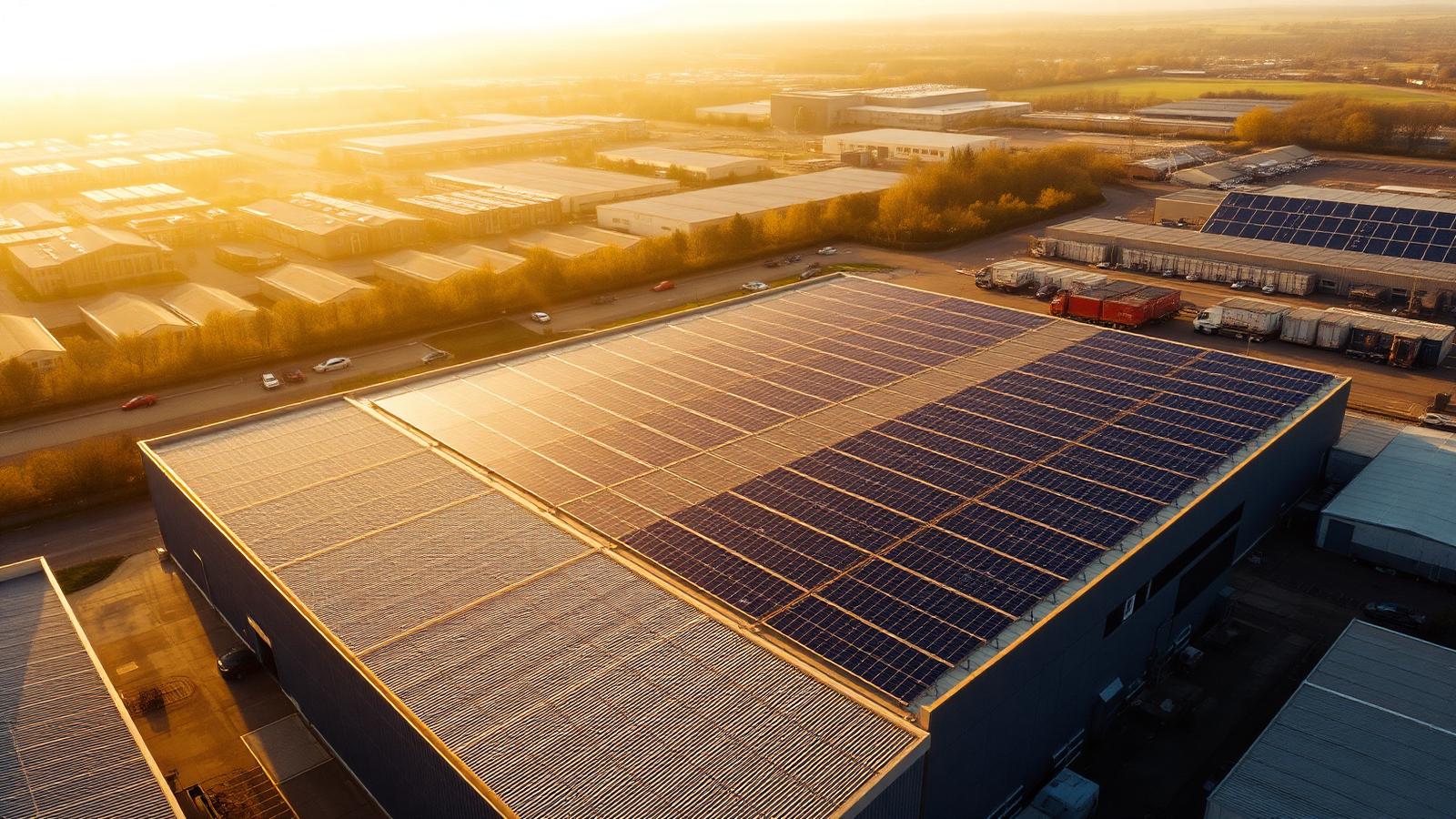
PPAs have been the standard funding model for large-scale commercial solar in the UK for years. They're now accessible to businesses with electricity bills from around £30,000/year. Here's exactly how they work.
How a solar PPA works
- A funder pays for the full installation — panels, inverter, battery (if applicable), installation and DNO connection.
- The system is installed on your roof and generates electricity for your building.
- You buy that electricity from the funder at a fixed rate — typically 8–15p/kWh, versus 25–35p/kWh from the grid.
- The funder earns their return over a 10–25 year contract from the margin between cost of generation and your rate.
- At end of term, you typically have the option to buy the system, extend the contract, or have it removed.
Ownership note
What does a PPA actually cost?
There is no upfront cost — that's the point. Your ongoing cost is your electricity rate, fixed at a below-market level with a small annual escalator (typically 2–3%) built into the contract.
| Business scenario | Grid cost before PPA | PPA rate | Annual saving |
|---|---|---|---|
| Medium manufacturer (200kW) | 28p/kWh — ~£56,000/yr | 10p/kWh on solar | ~£18,000–£24,000/yr |
| Logistics depot (150kW) | 26p/kWh — ~£39,000/yr | 9p/kWh on solar | ~£12,000–£16,000/yr |
| Retail park (100kW) | 30p/kWh — ~£30,000/yr | 11p/kWh on solar | ~£8,000–£12,000/yr |
Savings vary depending on system size, roof coverage, current grid rate and self-consumption.
PPA vs. buying outright — which is better?
| Factor | PPA | Outright purchase |
|---|---|---|
| Upfront cost | £0 | £50,000–£500,000+ |
| System ownership | Funder owns it | Your asset |
| Maintenance | Funder's responsibility | Yours |
| Savings from day one | Yes | Yes |
| Full Expensing / tax relief | Not applicable | Yes — 100% first-year relief |
| Long-term financial gain | Lower — funder takes margin | Higher — all savings to you |
| Balance sheet impact | Off-balance sheet (opex) | Appears as asset |
| Best for | Limited capex, opex preference | Profitable companies on 25% corp tax |
Rule of thumb
Find out if a PPA fits your site
Free pre-qualification from a commercial engineer — no obligation.
PPA contract terms: what to watch for
- Contract length: 10–25 years. Longer = lower rate but less flexibility.
- Escalator rate: 2% is common; push back on 3%. An 8p/kWh rate at 3% becomes 13p/kWh in year 20.
- End-of-term options: confirm purchase, extension and removal terms.
- Performance guarantees: a good PPA includes minimum generation cover.
- Exit clauses: understand early-exit fees and assignment to a new owner.
Who qualifies for a PPA?
Funders typically look for:
- A property you own or occupy on a long lease (10+ years remaining)
- Annual electricity spend of £30,000–£50,000+
- A roof or ground area suitable for 50kW+ of panels
- Daytime electricity use that aligns with solar generation
- A creditworthy business
We pre-qualify businesses as part of the initial conversation. If a PPA is the right route we'll tell you — and if outright ownership or a hybrid arrangement makes more sense we'll say that too.
Frequently asked questions
Can I switch to a better energy tariff if I have a PPA?
For your grid-supplied electricity (what the panels don't cover), yes. The PPA rate only applies to solar-generated electricity. Many businesses combine a PPA for solar with a negotiated grid contract for the remainder.
What happens if I sell the property during a PPA?
Most PPA contracts can be assigned to the new owner subject to their creditworthiness. If a buyer is unwilling to take it on, early exit fees may apply — worth clarifying in the contract before signing.
Is a PPA the same as solar leasing?
Similar but different. A lease charges a fixed monthly fee regardless of generation; a PPA charges per kWh generated. For variable generation, a PPA is usually better — you only pay for what you get.
Can I get battery storage included in a PPA?
Yes, increasingly. Battery storage can be included though it adds complexity to the contract. Discuss during the assessment.
