
Here's what the numbers look like in practice — and what to know before you install.
Retail: why the economics work
Supermarkets, garden centres, builders' merchants, car dealerships, DIY stores — all share characteristics that favour solar:
- Consistent daytime operating hours aligned with solar generation
- Significant continuous loads: lighting, refrigeration, HVAC, tills, EV charging
- Flat or low-pitch roofs providing excellent panel space
- Customer-facing operations benefit from a 'powered by solar' narrative
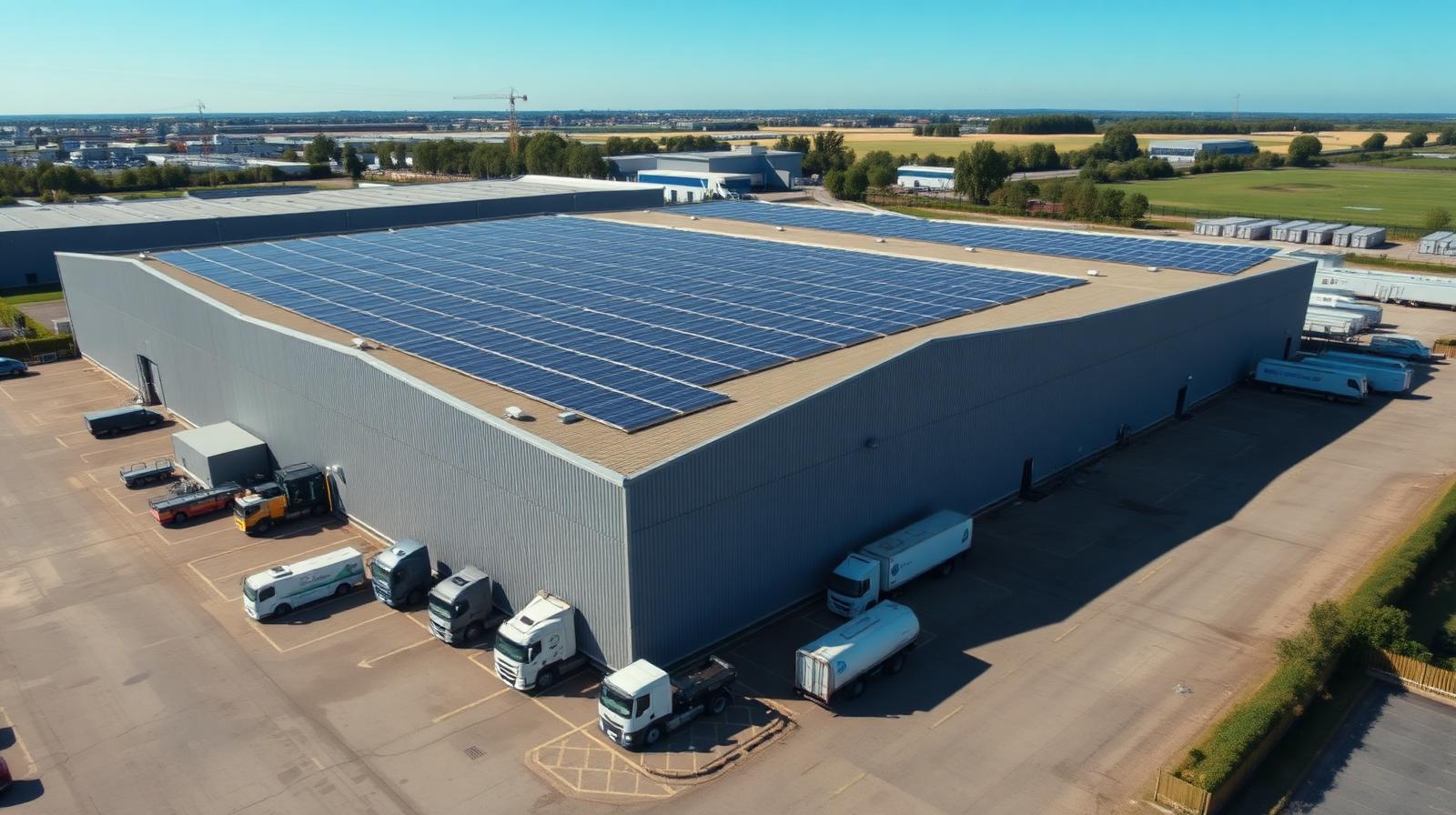
A large supermarket spending £200,000/year on electricity with 150kWp of solar can typically cut its bill by £35,000–£55,000/year. Payback is commonly 4–6 years before Full Expensing, shorter after.
Hospitality: different rhythm, still viable
Hotels, restaurants and leisure operators have significant evening and overnight loads that don't align with solar generation. The case is still strong but requires careful design:
- Hotels: high daytime loads in public areas justify solar. Battery storage extends coverage into the evening.
- Restaurants: lunch and early evening service create shoulder loads. A well-sized system with battery covers 50–65% of total electricity.
- Pubs and bars: quieter during solar peak hours, but kitchens, refrigeration and HVAC create base load. Battery adds evening coverage.
Battery first
The customer-facing ESG angle
For retail and hospitality, solar provides a marketing and brand asset that manufacturers don't have to the same degree. 'This store is powered by solar' resonates with customers in ways 'this factory is powered by solar' does not. UK consumer research consistently shows that sustainability credentials positively influence purchase decisions, particularly in food retail, hospitality and leisure.
Tailored to your site, your tariff, your trading hours
Free commercial assessment with full financial projection.
Alliant commercial case studies in leisure
- Hillsborough Golf Club — rooftop solar reducing club electricity costs
- Beauchief Tennis Club — system reducing operating costs and supporting member sustainability expectations
- Hillsborough Arena — events venue solar reducing per-event energy costs
- Tropical Ices — food production and retail with solar covering significant production load
Sizing for retail and hospitality
Retail: aim to cover 70–90% of daytime consumption with panel capacity. Add 50–150kWh battery for medium retail to cover shoulder demand. EV charging for staff/customer parking adds load that improves self-consumption.
Hospitality: size solar to cover 60–80% of daytime loads. Battery is more important — size for 100–200kWh to cover evening service. For hotels, guest room EV charging is an emerging revenue and self-consumption opportunity.
Funding options
Both sectors can access outright purchase + Full Expensing, PPA (zero-upfront), or asset finance. For franchise operations, individual units may not qualify for Full Expensing if the franchisee is a limited company — check with your accountant.
Frequently asked questions
What if our retail unit has a landlord — can we still install solar?
It depends on the lease. Many leases allow tenant modifications with landlord consent; some specifically permit energy efficiency improvements. Landlords often benefit from an improved EPC for rental compliance. We can provide documentation for tenants making the case.
Can solar be installed on a retail unit with a large shopfront and limited roof?
It depends on roof area above the shop floor. Even a 30–50kWp system can meaningfully reduce bills for a retail business spending £30,000+/year. We survey before recommending size.
How do we show customers we're powered by solar?
Most effective: a live generation display in-store, MCS/NICEIC certifications at the entrance, and signage. We provide the monitoring data feed for display purposes.
