
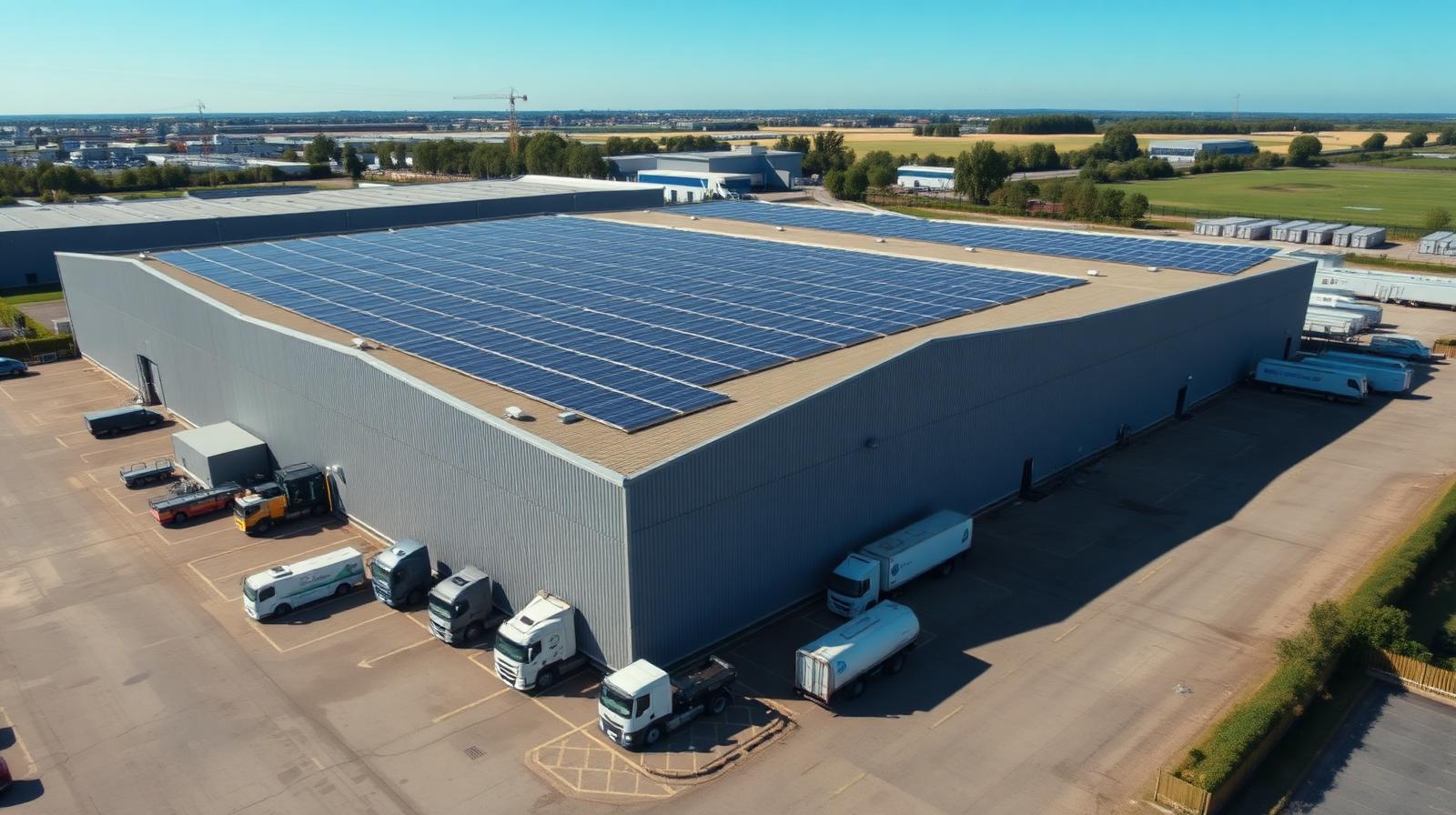
The core economics of commercial solar depend on using what you generate rather than exporting it. Logistics and distribution operations check every box.
Why logistics works so well for solar
- Large roof footprint: distribution warehouses of 5,000–50,000m² provide ample panel space
- Daytime operation: loading, dispatch and office functions run during solar generation hours
- Consistent base load: lighting, dock levellers, compressors, server rooms and EV charging
- High electricity spend: medium depots typically spend £40,000–£150,000/year
- Flat or low-pitch roofs: ballasted mounting with no roof penetrations and faster installation
The Shepherd Distribution case study
Shepherd Distribution is a logistics company in the North of England for which Alliant installed a commercial solar system.
| Metric | Result |
|---|---|
| Annual electricity saving | £22,389 |
| Payback period | 2.9 years |
| Return on investment | 38.7% |
The compounding return
Fleet electrification: the emerging multiplier
The next major opportunity is combining rooftop solar with EV fleet charging:
- Overnight depot charging from a solar-charged battery at 7–10p/kWh vs grid at 25–35p/kWh
- A 50-van electric fleet charging 40kWh each per night needs ~200kWp solar plus 400–500kWh of battery
- Combined saving from solar + cheap overnight fleet charging can add £50,000–£150,000/year depending on fleet size
Operators planning fleet electrification should design their solar system around that future demand now — battery-ready infrastructure that scales as the fleet transitions.
Get a depot-by-depot proposal
Multi-site commercial solar handled under a single relationship.
Temperature-controlled logistics
Cold stores and temperature-controlled distribution centres have particularly high loads — refrigeration compressors can run 24/7. Battery paired with solar is especially valuable: solar covers daytime refrigeration directly; the battery reduces overnight grid draw. Time-of-use arbitrage further reduces cost.
What a logistics solar installation looks like
For a medium distribution depot (10,000m² warehouse, 60 employees, £80,000/year electricity bill):
- Recommended system: 200–250kWp
- Roof area: ~1,200–1,500m²
- Annual generation: ~180,000–225,000 kWh
- Self-consumption: ~70–80%
- Annual saving: ~£30,000–£45,000
- Typical payback (outright): 4–6 years
- Effective payback after Full Expensing: 3–4.5 years
Frequently asked questions
Can we install solar while depot operations continue?
Yes. Rooftop installation causes no disruption to depot operations below. The only brief impact is during electrical commissioning — typically 2–4 hours during a quiet period or weekend.
We're a multi-site operation — can we do multiple depots?
Yes. We manage multi-site commercial projects and can install across depots simultaneously or in sequence under a single commercial relationship.
What if we need to expand the depot or relocate?
Expansion means more roof — an opportunity to scale up. Relocation during a PPA requires funder negotiation; under ownership, panels can sometimes be relocated (at cost) or valued as part of the building sale.
