The economics of commercial solar depend on self-consumption. Manufacturers run CNC machines, injection moulders, compressors, conveyors and HVAC during the exact hours solar generates — self-consumption of 80–90% is common.
Why manufacturing is the best sector for solar
By contrast, offices and retail may have good daytime loads but lower total electricity use. Manufacturers often spend £50,000–£500,000/year on electricity. At those levels, a 200kWp system saving £40,000/year reaches payback in under 5 years — before Full Expensing.
What a typical manufacturing solar installation looks like
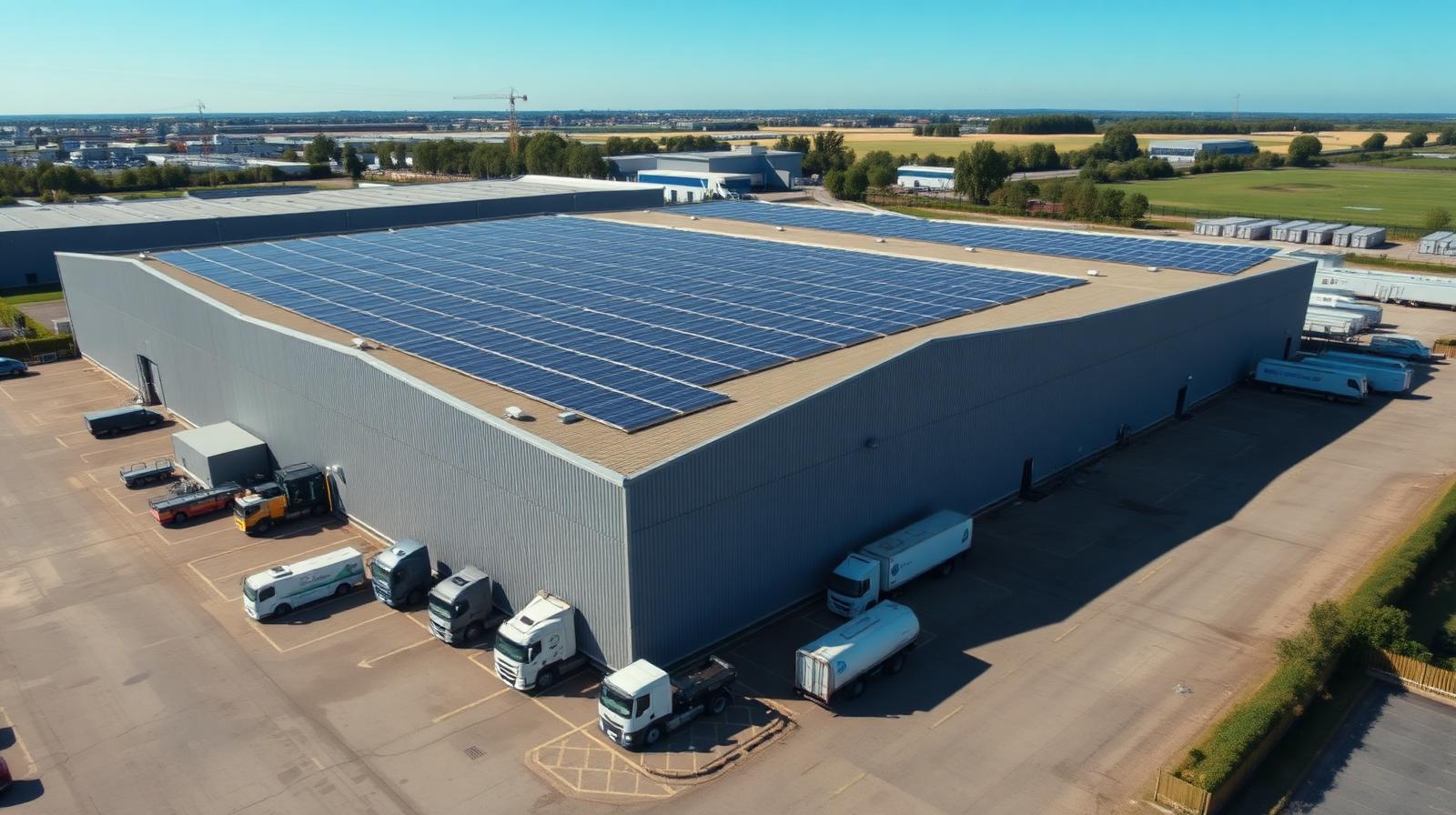
A medium-sized UK manufacturer occupying a 5,000–10,000m² site typically installs between 100kWp and 300kWp:
- 100kWp: ~600m² of roof, ~90,000 kWh/year, ~£18,000–£25,000/year saving
- 200kWp: ~1,200m² of roof, ~180,000 kWh/year, ~£36,000–£50,000/year saving
- 300kWp: ~1,800m² of roof, ~270,000 kWh/year, ~£54,000–£75,000/year saving
Installation typically uses ballasted flat-roof mounting (no roof penetrations) or pitched-roof rail systems. Most industrial roofs — steel profiled, membrane, concrete — are suitable.
The Full Expensing calculation for manufacturers
| System cost | Full Expensing saving | Effective cost | Annual saving | Payback (after tax) |
|---|---|---|---|---|
| £100,000 | £25,000 | £75,000 | ~£22,000 | ~3.4 years |
| £200,000 | £50,000 | £150,000 | ~£42,000 | ~3.6 years |
| £300,000 | £75,000 | £225,000 | ~£60,000 | ~3.75 years |
No equivalent
Model the numbers for your facility
Free site survey and HHD-based commercial proposal.
Process heat and beyond
Solar PV reduces electricity costs. For manufacturers with significant heat demand, a heat pump combined with solar can address both — particularly relevant for food processors and plastics manufacturers. Solar generates electricity; the heat pump uses it to produce heat at 3–4× efficiency.
Reducing Scope 2 emissions
Manufacturers increasingly face pressure on Scope 2 emissions from customers, investors and compliance obligations. Solar directly displaces grid electricity with zero-carbon generation — a component of many net-zero and science-based target commitments. The financial and ESG cases reinforce each other.
Case study: Pinder Brothers
Pinder Brothers is a manufacturing business for which Alliant installed a commercial solar system, sized to the facility's daytime production load. Full details on our case study page.
Frequently asked questions
Can solar be installed while manufacturing continues?
Yes — in almost all cases. Roof installation doesn't require production to stop. The only brief interruption is final electrical commissioning, scheduled during planned maintenance or a weekend.
What about dust, vibration or other manufacturing-specific conditions?
Panels are designed for outdoor industrial exposure. For sites with significant particulate emissions (foundries, woodworking, stone processing), we consider panel tilt and layout to maximise self-cleaning by rain.
Can we claim Enhanced Capital Allowances as well?
ECAs for energy-efficient equipment were largely replaced by Full Expensing. Solar and battery storage qualify directly under Full Expensing. Confirm with your accountant which route is most advantageous.
