
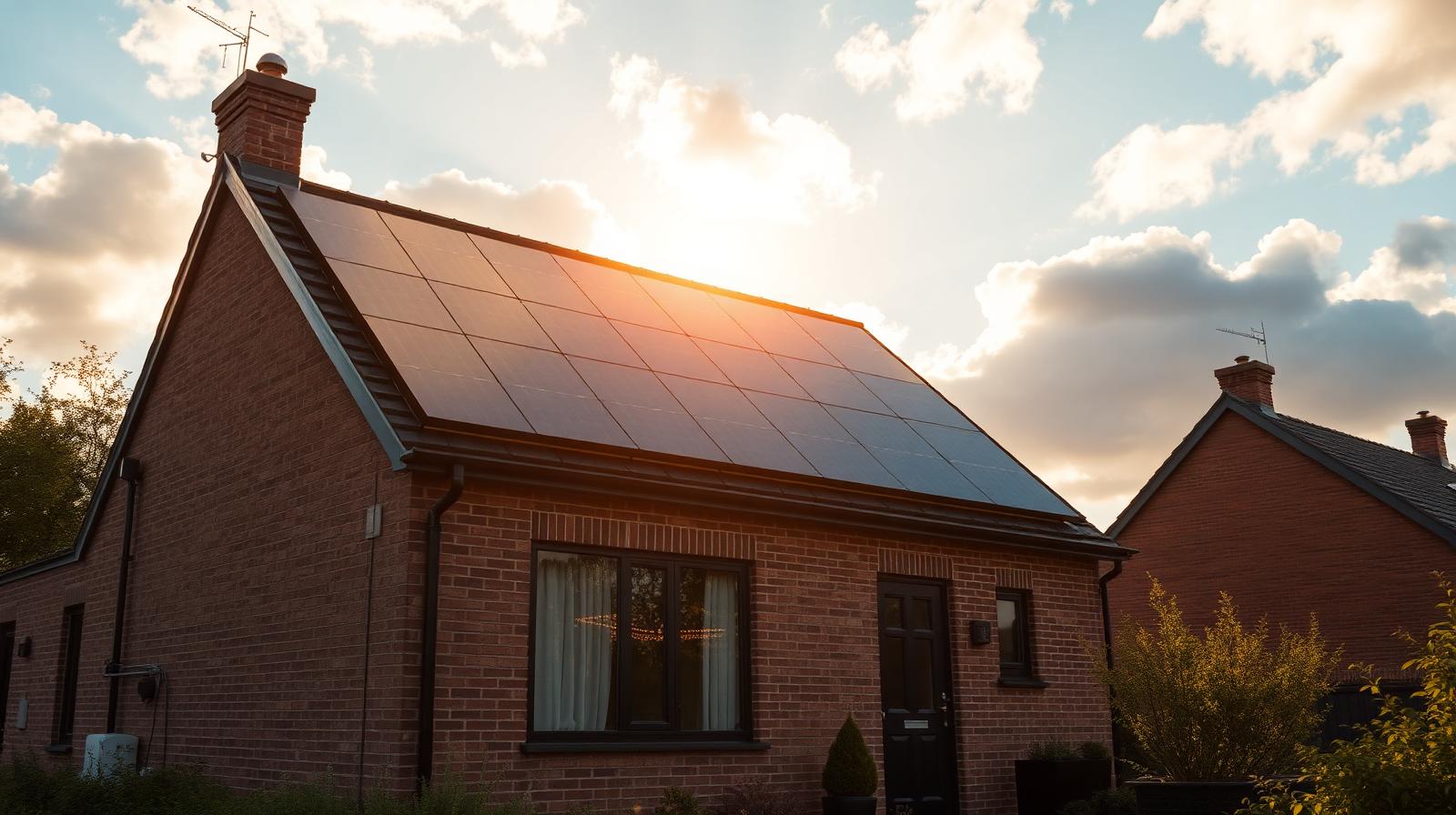
This is probably the most common concern we hear from homeowners in Lancashire, Yorkshire and Greater Manchester, and it's understandable: the idea that solar panels need Spanish sunshine to work is widespread and wrong.
How much sun does the North of England actually get?
The UK averages 1,100–1,350 peak sun hours per year, depending on location. The North-South split is real, but modest:
| Region | Typical peak sun hours | vs. UK average |
|---|---|---|
| South West England | 1,350–1,450 hrs/yr | +10–15% |
| South East England | 1,250–1,350 hrs/yr | +5–10% |
| Midlands | 1,150–1,250 hrs/yr | Average |
| Yorkshire | 1,100–1,200 hrs/yr | −5–10% |
| Lancashire / Greater Manchester | 1,050–1,150 hrs/yr | −10–15% |
| Scotland (Central) | 950–1,050 hrs/yr | −20% |
A system in Lancashire generates around 10–15% less electricity per year than the same system in Devon. On a £7,000 system saving £800/year in Devon, the Lancashire equivalent saves around £680–£720/year. Payback is slightly longer — but still comfortably within the system's useful life.
Perspective
What matters more than location
Roof orientation and shading have a bigger impact on system performance than the North-South location. A south-facing roof in Lancashire will outperform an east-facing roof in Brighton. The factors that matter, in order:
- Roof orientation (south > south-west/south-east > east/west > north)
- Roof pitch (15–50° is optimal; flat roofs can be angled)
- Shading (trees, chimneys, neighbouring buildings)
- Panel quality (degradation rate matters over 25 years)
- Geographic location (North-South difference is real but modest)
Real installations in the North: what do the numbers show?
We're based in Nelson, Lancashire. The majority of our domestic installations are in the North of England — Lancashire, Yorkshire, Greater Manchester, Merseyside. Here's what typical performance looks like:
- A south-facing 8-panel (3.72 kWp) system in Lancashire generates approximately 2,900–3,300 kWh/year
- An equivalent system in Hampshire generates approximately 3,200–3,600 kWh/year
- The difference is around 300–400 kWh/year — worth roughly £70–100/year at current rates
- The financial gap over 25 years: approximately £2,000 — against a backdrop of total lifetime savings of £15,000–£20,000
Local data
Get a site-specific projection for your area
Local data, not national averages. From an MCS-registered installer based in Nelson, Lancashire.
The battery advantage in the North
One thing that partly offsets the generation difference is that northern homes tend to use more heating in the evenings and winters — which means a battery system's ability to store daytime generation for evening use is proportionally more valuable. Higher heating demand also makes the combination of solar + heat pump + battery a more compelling whole-house proposition in northern climates.
The bottom line
Solar panels work in the North of England. They generate slightly less electricity per year than an identical system in the South, but the difference is modest and easily offset by the right system design, a battery, and a smart tariff. The fact that we install hundreds of systems annually in Lancashire, Yorkshire and Greater Manchester, with consistent positive customer outcomes, is the most relevant evidence.
Frequently asked questions
What's the best location for solar panels in Northern England?
South-facing roofs at a pitch of 30–40° are ideal wherever you are. In the North, because there's slightly less sunlight to work with, getting the orientation right matters a little more. We survey every property before installation to confirm roof suitability.
Does rain affect solar panel performance?
Rain actually helps — it cleans the panels, removing dust and debris that reduce efficiency. Rain doesn't generate electricity (panels need light, not heat), but a clean panel after a rainy day performs better than a dusty one.
Is solar viable in Scotland?
Yes, though with a longer payback period than southern England. Scotland also has distinct grant funding through Home Energy Scotland (up to £17,500 grant + £7,500 loan), which makes the financial case much stronger for Scottish homeowners.
