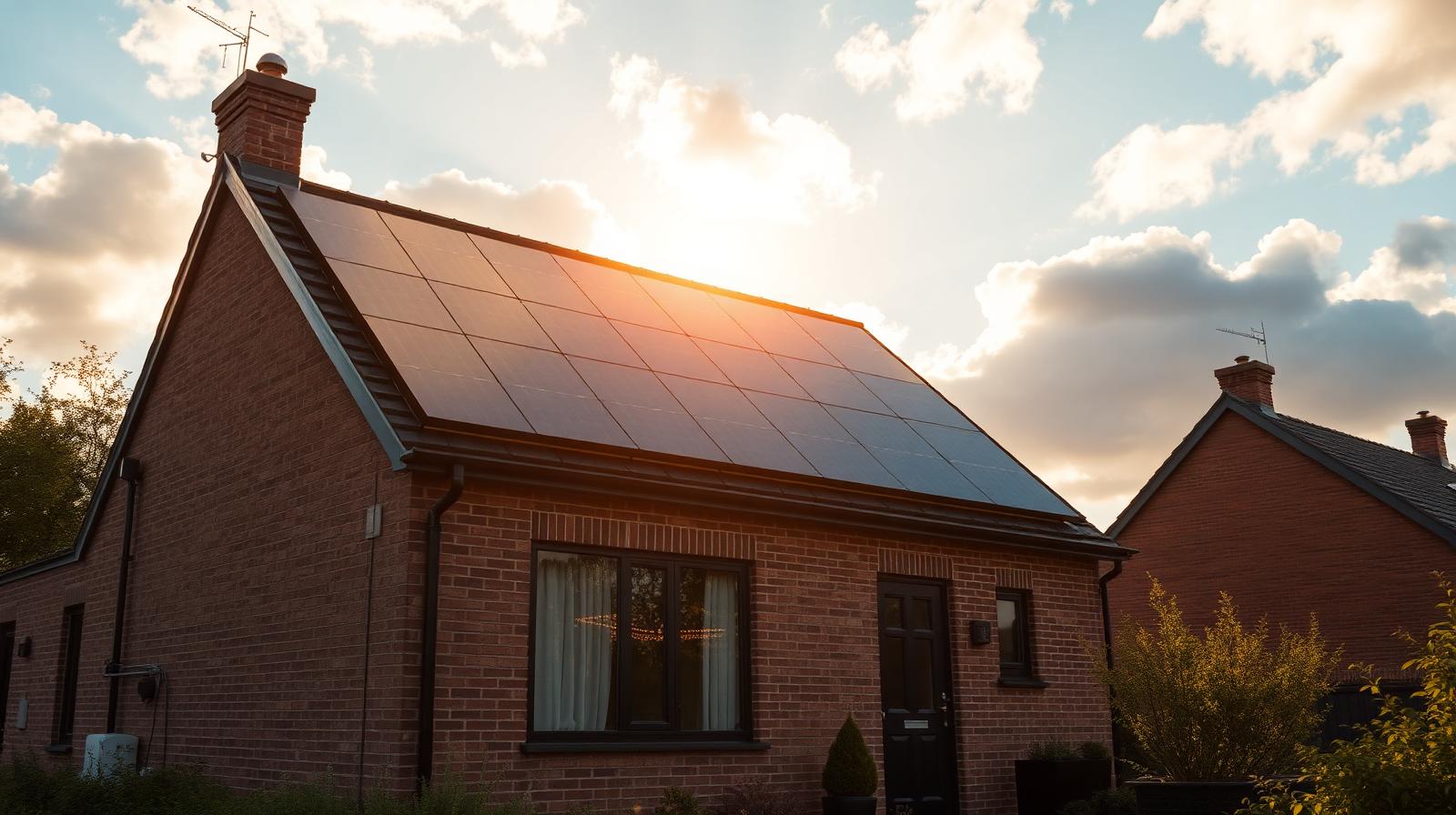
Here's what the data shows, and what really matters when it comes to property value.
What the research shows
UK-specific research on solar and house prices is limited compared to the US, but the available evidence points in the same direction:
- A 2023 analysis by Zoopla found that properties with an EPC rating of A or B command a premium of 5–12% over equivalent properties rated D or below
- Research by the Centre for Economics and Business Research (CEBR) estimated solar panels can add around 4% to UK property values
- US data (more extensive) consistently shows solar adds 3–4% to home values — UK data is broadly consistent with this
The nuance is that the value isn't coming from the panels themselves — it's coming from the lower energy bills, the better EPC rating, and the fact that buyers increasingly understand what a solar system means for their future running costs.
The EPC effect
This is arguably more important than the headline value premium. From April 2025, rental properties in England are required to meet a minimum EPC rating of C to be let to new tenants (existing tenancies have until 2028). For owner-occupiers, EPC C is increasingly the threshold for accessing the best mortgage rates.
Solar panels typically move a property up one or two EPC bands — often the difference between D and B, or E and C. For a landlord or homeowner planning to sell or remortgage, this can matter significantly.
Green mortgages
When solar adds less value
- Short ownership: if you're planning to sell within 3 years, the value uplift may not fully offset the installation cost. For longer-term ownership (5+ years), the calculation improves significantly.
- Already high EPC: if your property is already A or B rated, solar adds less incremental value — you've already captured most of the EPC benefit.
- Unusual installations: flat-roof solar, ground-mounted systems, or installations using spray foam around the rafters can occasionally create complications with mortgage valuers. Conventional roof-mounted systems on tiles cause no issues.
Leasehold considerations
If you own a leasehold flat or house, check your lease before installing. Some leases require freeholder consent for external alterations. Most modern leases either don't restrict this or allow it with notification — but it's worth confirming before you arrange a survey.
Get a quote
MCS-registered install with all documentation to transfer to a future buyer.
What buyers think
Buyer perception of solar has changed significantly in the past five years. Properties with solar panels — particularly when accompanied by battery storage and a smart tariff — are increasingly marketed as a feature rather than an oddity. Running costs are a bigger factor in purchasing decisions post-2022 energy crisis, and a certified system with 20+ years of remaining life is a genuine asset.
The important thing is documentation: MCS certificate, warranties, and SEG registration details all transfer to the new owner. Make sure these are in order before listing the property.
Frequently asked questions
Do buyers pay more for houses with solar panels?
Research suggests yes — typically in the range of 4–12% depending on system quality, EPC improvement, and local market. The most consistent benefit is the EPC rating uplift, which has become increasingly important for mortgage access and rental compliance.
What happens to my solar system when I sell?
The system remains with the property. You transfer the MCS certificate, warranties, and SEG registration to the new owner. It's worth assembling these documents before putting the property on the market.
Will solar cause problems with my buyer's mortgage?
Standard roof-mounted solar panels are unproblematic for all mainstream UK mortgage lenders. The exception is if spray foam has been used in the roof space. Standard panel installations on roof tiles raise no mortgage concerns.
