Three factors determine how quickly a commercial solar installation pays back: electricity spend, self-consumption pattern, and system size relative to spend. The interaction between these is sector-specific.
What drives commercial solar ROI?
- Electricity spend: the higher your bills, the more you save. Businesses spending £30,000+/year are prime candidates. Above £100,000/year, solar is almost always financially compelling.
- Self-consumption rate: solar generates during daylight hours. Daytime operations use generation directly (avoiding grid cost); operations that close during daylight export at lower SEG rates.
- System size relative to spend: a 100kW system on a £15,000/year bill has a longer payback than the same system on a £60,000/year bill.
ROI by sector — how the numbers compare
| Sector | Typical system | Self-consumption | Typical payback | 10-year saving |
|---|---|---|---|---|
| Manufacturing | 100–500kW | 75–90% | 3–5 years | £200k–£1m+ |
| Logistics / Distribution | 150–500kW | 60–80% | 3–6 years | £150k–£600k |
| Agriculture | 30–200kW | 50–75% | 5–8 years | £50k–£250k |
| Retail (day trading) | 30–150kW | 70–85% | 4–7 years | £75k–£300k |
| Hospitality / Hotels | 30–100kW | 65–80% | 5–8 years | £60k–£200k |
| Leisure / Sports clubs | 20–80kW | 50–70% | 5–9 years | £40k–£150k |
| Education | 30–200kW | 70–85% | 4–7 years | £60k–£250k |
Manufacturing: the strongest commercial case
Manufacturing consistently delivers the fastest solar payback of any sector. High continuous daytime electricity load, large roof areas, high industrial tariffs (22–35p/kWh) and Full Expensing combine. A typical 200kW manufacturing installation self-consumes 80–90% of generation and pays back within 3–5 years. After that, £40,000–£60,000/year flows directly to the bottom line for 20+ years.
Logistics and distribution: real payback data
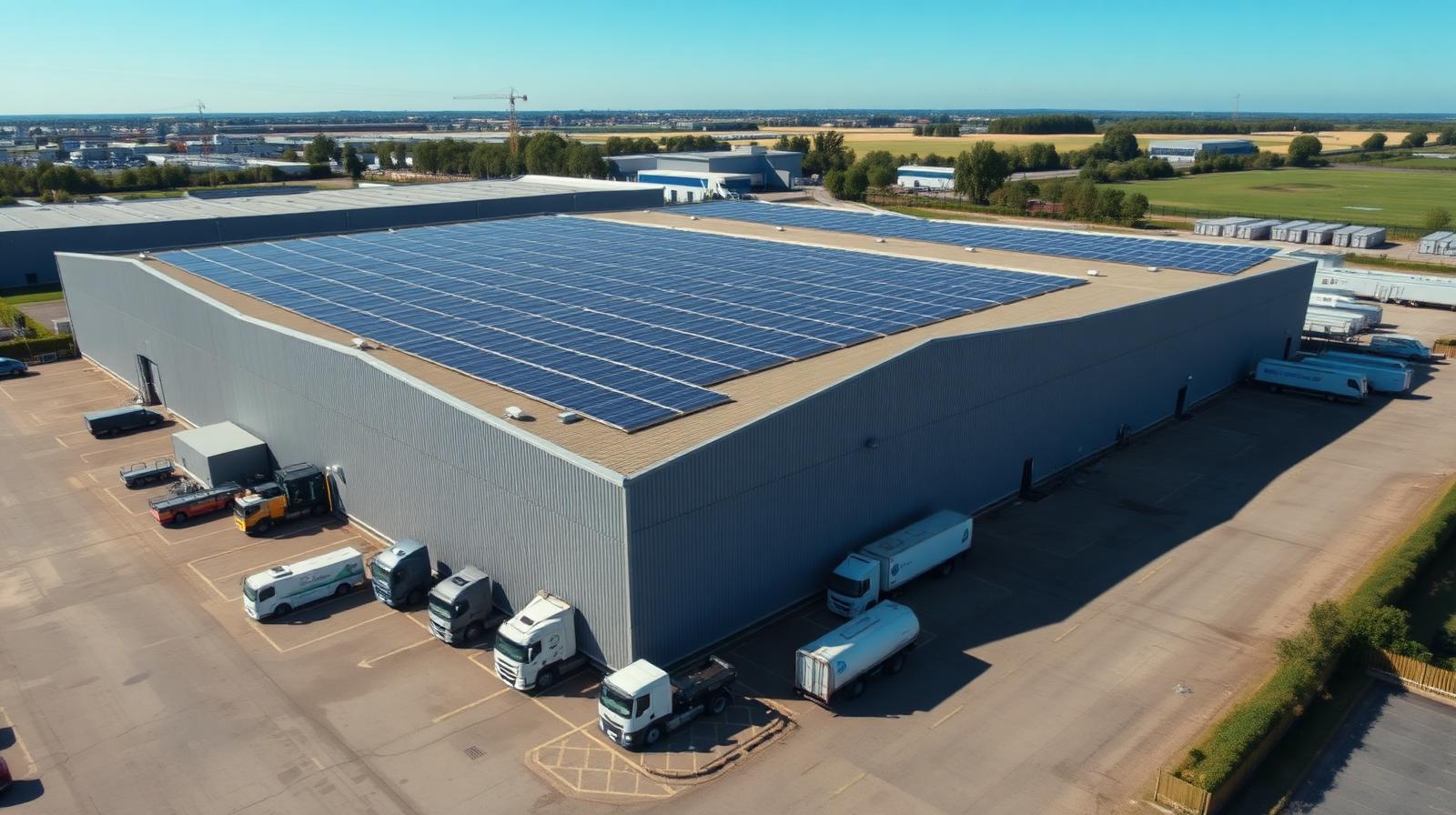
Large distribution depots have some of the best conditions for solar: vast flat roofs, consistent daytime operations, and energy-intensive loads (dock levellers, lighting, vehicle charging, temperature control).
Shepherd Distribution — Alliant case study
Fleet electrification adds a further dimension. As operators move to electric vans and HGVs, rooftop solar becomes the cheapest source of charge — reducing electricity bills and fuel costs simultaneously.
Get a sector-specific projection
A free commercial assessment from a renewable energy engineer.
Retail: strong daylight self-consumption
Supermarkets, garden centres, retail parks and builders' merchants trade during daylight hours with consistent loads (lighting, refrigeration, HVAC, tills) on flat or low-pitch roofs. A retail unit spending £80,000/year on electricity with a 100kW system can typically save £20,000–£30,000/year, with payback of 4–6 years.
Agriculture: larger roof, more complexity
Grain stores, livestock barns, milking parlours and poultry sheds often have large south-facing roofs and significant electricity loads. Payback periods are somewhat longer because farm electricity use is variable. Grant funding from the Rural Payments Agency combined with AIA/Full Expensing can reduce effective cost by 40–50%.
Leisure and sports clubs
Hillsborough Golf Club, Beauchief Tennis Club and Hillsborough Arena — Alliant installations across the leisure sector. Payback is slightly longer than manufacturing but the sustainability narrative adds membership and sponsorship value beyond the financial model.
Frequently asked questions
How do I calculate the ROI for my specific business?
Key inputs: current annual electricity spend, usage profile (when during the day you use power), roof area and orientation, and funding route (outright vs PPA). We model this for every commercial enquiry and provide a full financial projection before you commit.
Does solar ROI change if electricity prices fall?
Yes — if grid prices fall significantly the saving per kWh reduces. But prices remain structurally above pre-2021 levels and most credible projections show them staying elevated. Even at 20p/kWh, commercial solar typically delivers a 6–8 year payback.
Can I get a guaranteed return?
Detailed projections, yes — contractual guarantees no, for outright purchases. Some PPA structures include performance guarantees from the funder. Panels and inverters carry manufacturer warranties of 10–25 years.
