
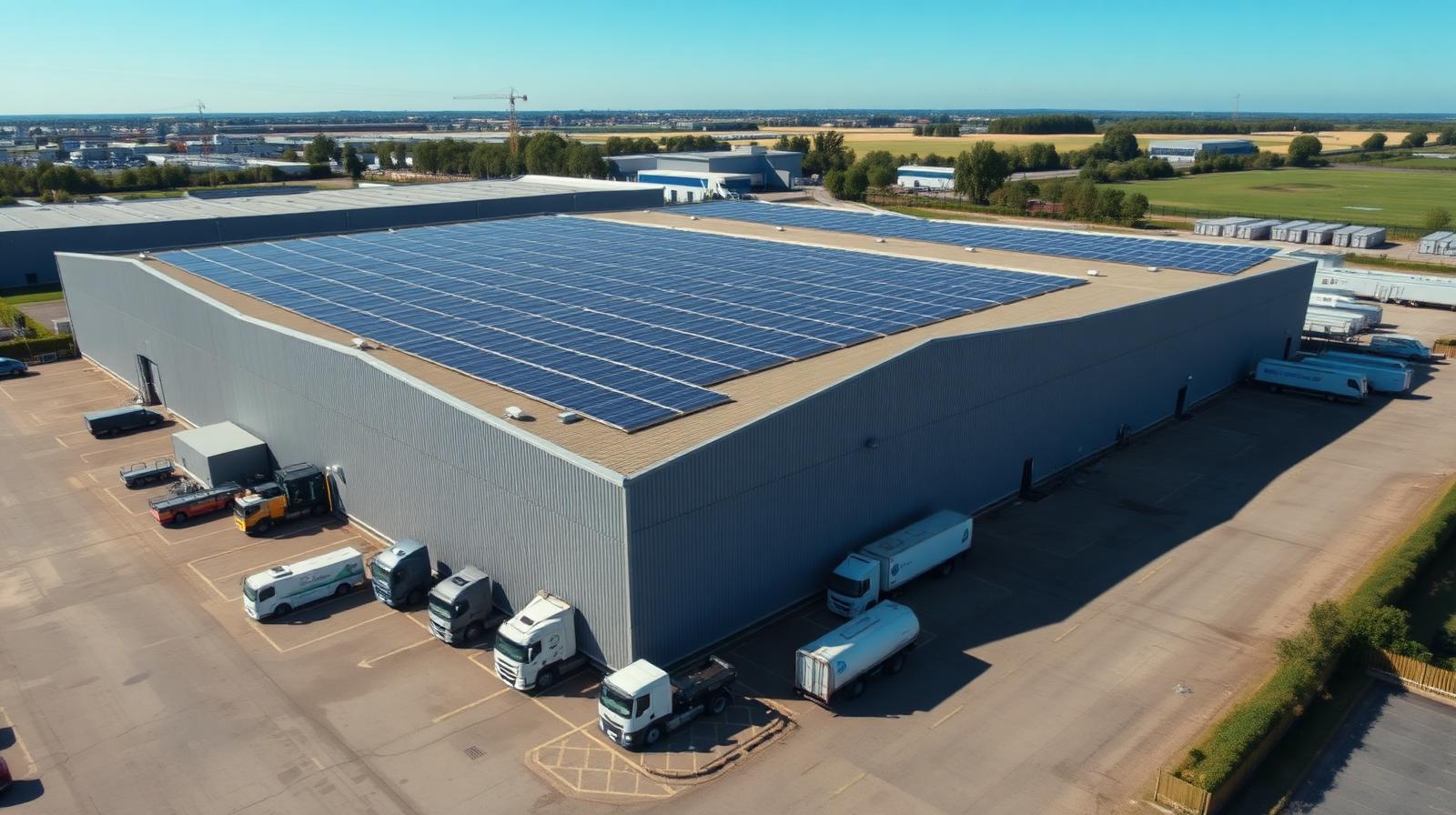
Commercial electricity pricing is more complex than domestic — half-hourly metering, demand charges, time-of-use rates, Triad avoidance. Battery storage interacts with all of these.
Why commercial battery storage matters more than domestic
- Demand charge avoidance: some commercial tariffs include a demand charge based on peak consumption. A battery reduces peak draws — sometimes saving more than the energy cost itself.
- Time-of-use arbitrage: charge from cheap overnight or midday solar; discharge during expensive peak-rate periods (typically 4–7pm).
- Triad avoidance: for Triad-exposed businesses, battery discharge during the three highest-demand half-hours of winter can save thousands per year.
- Extended self-consumption: store surplus daytime solar for evening use.
What commercial battery storage costs
| Battery capacity | Typical installed cost | Best for |
|---|---|---|
| 50–100 kWh | £40,000–£80,000 | Small-medium commercial, demand charge reduction |
| 100–250 kWh | £80,000–£200,000 | Medium industrial, time-of-use arbitrage |
| 250–500 kWh | £200,000–£400,000 | Large industrial, Triad avoidance |
Tax relief
When battery adds the most value
- Time-of-use tariffs with significant peak vs off-peak differential
- Demand charges on your supply contract
- Significant evening electricity use not covered by solar generation
- EV fleet charging — batteries handle overnight fleet charging cheaply
- Triad risk where savings justify system cost
The case is weaker when you're on a flat-rate tariff with little peak/off-peak differential, when almost all your use is during solar generation hours, or when you have a small system with limited surplus.
See the battery business case for your site
Modelled against your half-hourly data and tariff.
Real example: solar + battery at a distribution depot
A logistics depot running 6am–10pm installs 200kWp solar and a 150kWh battery. During the day, solar covers 70% of operations. The battery stores lunchtime surplus for the 5–9pm peak rate period.
- Annual solar saving (self-consumed): ~£45,000
- Battery peak-shifting saving: ~£12,000
- Total annual saving: ~£57,000
- Combined system cost: ~£280,000
- After Full Expensing (25% tax): effective cost £210,000
- Payback: approximately 3.7 years
Standalone vs combined
Battery-ready vs battery-included
Where immediate battery payback is marginal, a battery-ready installation is an option. A hybrid inverter with battery connections is fitted at solar installation, so a battery can be added later without replacing the inverter. The significant cost saving vs retrofitting later is in not having to change the inverter.
Frequently asked questions
What is Triad avoidance and how much can it save?
Triads are the three half-hour periods of highest grid demand between November and February, at least 10 days apart. Eligible businesses pay a premium for electricity drawn during these periods. A battery discharging during likely Triads can save £5,000–£30,000/year for eligible businesses.
Can we get battery storage without solar?
Yes — standalone commercial batteries (charged from grid overnight, discharged peak) are viable on strong time-of-use tariffs. Payback is typically longer than solar + battery combined, but upfront cost is lower.
How long does a commercial battery last?
Typically 10-year warranties with capacity guarantees (usually 80% of original). In commercial duty-cycling scenarios, batteries often last 12–15+ years in practice.

